
Quick Summary: Technology is reshaping what’s possible in memory care, from AI-powered monitoring systems and smart sensors to real-time alert tools that help communities respond faster and more effectively to resident needs. This blog explores how these innovations are raising the standard for memory care safety, what families should look for when evaluating a community’s approach to technology, and how Vitality Living’s partnership with EyeWatch Live earned national recognition for its impact on resident safety and peace of mind.
For families navigating memory care, safety is almost always the biggest concern. Will my loved one be monitored closely enough? What happens if they wander or fall? How will staff know something is wrong before it becomes a crisis?
These are the right questions to ask, and the answers are evolving rapidly. Advances in memory care technology are giving senior living communities new tools to monitor, respond, and intervene in ways that simply weren’t possible a few years ago. AI-powered tracking systems, smart sensors, and real-time alert platforms are changing the day-to-day reality of memory care safety in meaningful, measurable ways.
At Vitality Living, this isn’t a future aspiration. It’s already part of how we care for residents today, and the results have been recognized on a national stage.
Vitality Living and EyeWatch Live: A National Award-Winning Approach to Safety
In 2024, Vitality Living received the Argentum Best of the Best Award for its AI-powered safety program developed in partnership with EyeWatch Live. Argentum is one of the leading senior living industry associations in the country, and the Best of the Best Award recognizes the most innovative and impactful programs across the field. Being recognized in this category reflects a standard of excellence, not just in technology adoption, but in how that technology is integrated into a community’s broader care approach.
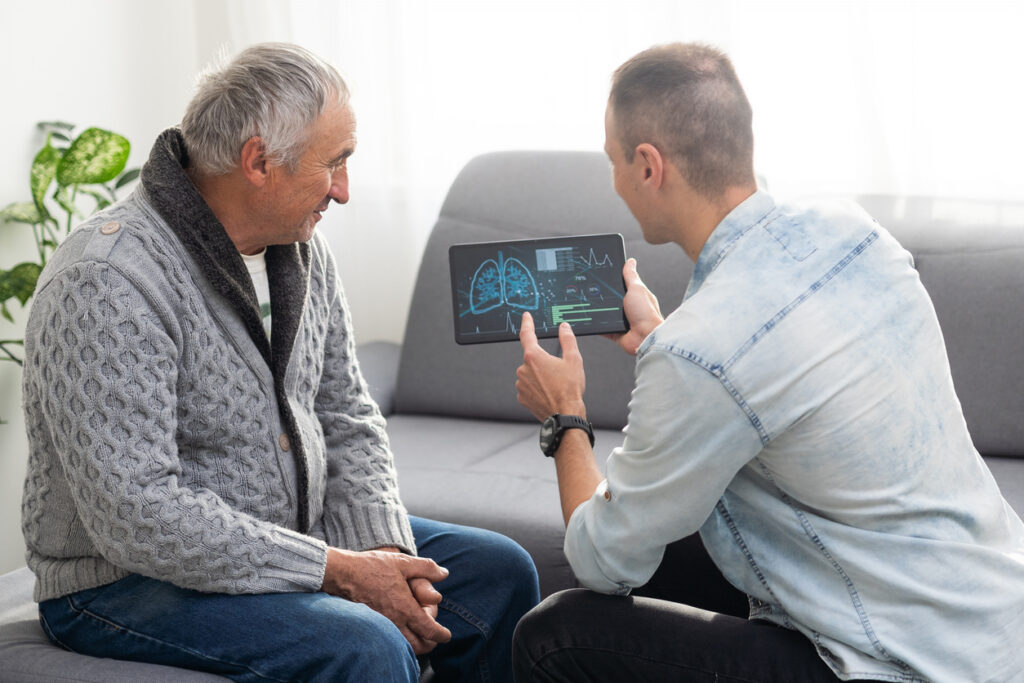
EyeWatch Live is an AI-driven monitoring platform designed specifically for senior living environments. It uses a network of smart sensors and real-time video analysis to track movement, detect changes in behavior or routine, and generate alerts that allow staff to respond proactively rather than reactively. For memory care communities in particular, where residents may not be able to communicate their needs clearly or recognize when they are in a potentially unsafe situation, this kind of continuous, intelligent monitoring adds a layer of protection that traditional staffing models alone cannot provide.
What Memory Care Technology Actually Does
It’s worth explaining what AI monitoring in a memory care setting actually looks like in practice. The reality is more nuanced and more human-centered than the term “AI monitoring” might initially suggest.
Smart Sensors and Movement Tracking
Modern memory care safety features often include sensor systems that monitor movement throughout a community without requiring residents to wear or interact with any device themselves. These sensors can detect when a resident leaves their room at an unusual hour, when movement in a particular area stops unexpectedly, or when patterns of behavior deviate significantly from a resident’s established routine.
For residents living with Alzheimer’s disease or other forms of dementia, changes in behavior or routine can be early indicators of a health change, a UTI, increased agitation, or the beginning of a fall event. Detecting these signals early allows staff to intervene before a situation escalates.
Real-Time Alerts and Staff Response
AI and health monitoring for seniors becomes most valuable when it connects directly to the people providing care. EyeWatch Live’s platform generates real-time alerts that reach staff immediately when something requires attention, allowing the right person to respond quickly without relying on a resident to call for help or a staff member to notice a concern during routine rounds.
This speed of response is particularly meaningful in memory care, where residents may not be able to use a call button, may not recognize they need help, or may react with confusion or distress in a way that delays intervention if it isn’t anticipated.
Wandering Prevention
Wandering is one of the most serious safety risks for individuals living with dementia. AI monitoring systems support existing physical safety measures, such as secured doors and enclosed outdoor spaces, by adding a layer of behavioral awareness. When a resident approaches an exit area or exhibits movement patterns associated with wandering behavior, the system can alert staff proactively rather than waiting for a door to be opened.
This is the kind of protection that provides peace of mind for families because it means safety isn’t dependent on any single point of intervention.
What This Technology Does Not Replace
It’s important to be clear about something: memory care AI and smart monitoring technology are tools that support human care. They are not a substitute for it.
The relationships between residents and caregivers, the warmth of a familiar team member’s voice, the attentiveness of someone who knows a resident’s history, preferences, and personality are all irreplaceable elements of quality memory care. No monitoring system can provide the human connection that is central to a dignified and meaningful life for someone living with dementia.
What the AI technology does is give the people providing that human care better information, faster. It reduces the gap between when something happens and when a caregiver becomes aware of it. It supports staff in doing their jobs more effectively and with greater confidence. And it gives families a more transparent window into their loved one’s safety and daily experience.
At Vitality Living, the integration of EyeWatch Live’s platform is designed to enhance the capacity of our care teams, not to replace the compassion and relationships that define the care we provide. The technology works in the background so that our people can be more present in the foreground.
Why Senior Living Safety Technology Matters
Memory care residents face a distinct set of safety considerations compared to those in assisted living or independent living settings. Cognitive decline affects a person’s ability to recognize danger, communicate needs, navigate their environment safely, and respond appropriately to unexpected situations.
This means that senior living safety in a memory care context requires a higher level of vigilance, a more proactive approach, and systems that account for the unpredictability that often accompanies dementia. Traditional safety measures, call buttons, and scheduled check-ins are valuable but inherently reactive. They depend on a resident being able to signal a need, or on a team member being in the right place at the right time.
AI-powered monitoring shifts the model toward prevention and early detection. It creates a continuous, consistent layer of awareness.. For families choosing a memory care community, understanding whether they’ve invested in this kind of technology is an increasingly important part of the evaluation process.
Questions to Ask When Evaluating a Memory Care Community
When touring memory care communities or speaking with their teams, asking specific questions about technology and safety systems will give you a clearer picture of how a community approaches resident protection. Here are some questions worth raising:
About monitoring and alert systems:
- Does the community use AI monitoring or smart sensor technology to support resident safety?
- How does the system generate alerts, and who receives them?
- How quickly are alerts responded to, and what does that response process look like?
- Has the community tracked outcomes data related to falls, wandering events, or emergency response times since implementing the technology?
About the balance of technology and human care:
- How does your team use monitoring data to inform individual care plans?
- How do team members stay connected to residents as people, not just as data points?
- How is new technology introduced in a way that respects residents’ comfort and dignity?
About transparency with families:
- Are families informed when a monitoring alert is generated?
- How does the community communicate proactively with families about safety-related incidents or concerns?
- Is there a family portal or communication platform that provides visibility into a loved one’s daily experience?
These questions will help you assess whether a community’s approach to technology is thoughtful and integrated or simply a marketing talking point.
What to Look for in a Memory Care Community’s Safety Approach
Technology is one piece of a larger safety picture. When evaluating memory care safety features, look for communities that combine physical environment design, trained and consistent team members, thoughtful programming, and technology-supported monitoring into a coherent, integrated approach.
Physical safety features to look for include secured perimeters and outdoor spaces designed for safe wandering, well-lit hallways and common areas, clear visual cues to help residents navigate their environment, and accessible bathrooms with appropriate safety hardware.
Team-related factors are equally important. Ask about staff-to-resident ratios in memory care specifically, how frequently they receive dementia-specific training, and how long team members have typically been with the community. Consistency in staffing is particularly meaningful for memory care residents, who benefit enormously from familiar faces and established relationships.
Programming also plays a safety role that is often underappreciated. Structured, engaging daily activities reduce agitation and restlessness, which are among the most common precursors to wandering and other safety-related events. A community with a rich, thoughtfully designed memory care program will invest in safety as much as it does in quality of life, because the two are deeply connected.
How Vitality Living Integrates Technology With Personalized Memory Care
At Vitality Living, our memory care communities are designed around the understanding that safety and quality of life are not competing priorities. They reinforce each other.
Our partnership with EyeWatch Live reflects a deliberate investment in the tools that allow our teams to provide the most attentive, responsive care possible. The AI monitoring platform works alongside our trained memory care team, our Vivid Life programming, and our thoughtfully designed living environments to create a comprehensive safety ecosystem that families can trust.
We believe that families navigating memory care deserve full transparency about how a community keeps their loved ones safe, and we welcome the conversation. Whether you’re in the early stages of research or ready to tour a specific community, our team is here to answer your questions honestly and help you make the most informed decision possible.
Find a Vitality Living memory care community near you to schedule a tour or speak with a member of our team.